
9 Mistakes On The Path to Enlightenment

During my years as a seeker, I stumbled into numerous spiritual traps. Each time, I thought I was on the right path, only to realize I was led astray by my own misunderstandings and desires. When I began teaching, I saw the same patterns repeat in others. I witnessed sincere seekers making the same mistakes, struggling with the same illusions. Waiting For The Guru To Enlighten You Enlightenment isn’t a prepacked snack that the guru can simply hand out; it’s a revelation that emerges from within. One of the most widespread trap is the belief that enlightenment will be bestowed by some enlightened master or guru. This idea stems from a fundamental misunderstanding of the nature of awakening. True enlightenment isn’t something that can simply be given – it must arise from within your own being through direct experience. The idea that someone else can enlighten you bypasses the essential inner work needed for true transformation. No guru can do the inner work for you; the real journey begins when you dive into the depths of your being and face your shadows, embrace your fears, and ultimately realize your true nature. While spiritual teachers can offer valuable wisdom and guidance, the path is yours to walk, the discoveries yours to make. Too Much Reading And Watching, Too Little Practice In this era of millions of YouTube videos, it has become easy for spiritual seekers to fall into the trap of becoming perpetual students – devouring book after book, video after video, in an attempt to intellectually comprehend the nature of reality. While teachings can offer insightful maps, they are just maps – not the real thing. I fell into this trap myself. At one point, my bookshelf was overflowing with spiritual texts, and I could recite teachings verbatim. But there was a disconnect. I was accumulating knowledge without practice. An obsession with accumulating spiritual knowledge, without the practice, becomes a form of avoidance. It allows the seeker’s ego to feel spiritually superior and without actually doing the hard inner work. True awakening is not a philosophical concept. It is a radical undoing, a shedding of every belief, identity and concept until only the vastness of the present moment remains. Enlightenment -A Magic Cure-All Most seekers have the concept of enlightenment as a magic pill that will instantly solve all their problems and make life a perpetual state of bliss. They fantasize that awakening will make them invulnerable to any future suffering. Even the most enlightened masters aren’t immune to the challenges of human existence – aging, sickness, and taxes. What awakening provides is not protection against life’s challenges, but a profound openness, acceptance and spacious perspective to meet those challenges with equanimity and wisdom. The enlightened ones have realised that suffering is an innate part of existence. True freedom lies in giving up one’s resistance against that reality, and learning to flow with what arises with unbounded compassion and clarity. Mistaking Spiritual Glimpses for the Enlightenment On the spiritual path, seekers encounter profound mystical experiences, visions, states of bliss and insights. These experiences can be deeply transformative and provide glimpses into the nature of reality. However, it is a common mistake to confuse these experiences with true enlightenment. While these spiritual experiences can be powerful catalysts for growth, they are ultimately transitory. True enlightenment is not a fleeting experience but a fundamental transformation in one’s perception of reality. Seekers also get seduced by spiritual glimpses and begin chasing after those fleeting highs. They get attached to the experience itself and essentially turn it into a new object of desire, a new drug to be craved. The search then becomes about reliving those experiences. At some point, you must be willing to let it all go – the endless mystery cannot be contained by any experience. To cling to them is to mistake the horizon for the entire sky. A Collection of Words is not the real thing The word apple is not the real apple, but a label trying to capture the essence of the fruit. Just as the word fails to convey the experience of holding a real apple, so do spiritual teachings fall short of capturing the true nature of enlightenment. Every spiritual teaching is ultimately just a finger pointing at the moon – a symbolic map trying to express the inexpressible. To mistake the finger for the moon is to become trapped in delusion. Enlightenment can never be contained or defined by any belief or conceptual framework. It is the open expanse of being. To truly understand enlightenment, one must look beyond words and concepts, diving into the direct, experience of being. Using Enlightenment To Escape Suffering Some seekers view enlightenment as a way to check out, disengage and transcend the whole mess of human existence. But this perspective completely misses the essence of true awakening, which is about fully embracing this present reality, not escaping it. Enlightenment isn’t a dissociated state of detachment from the world, but a deeper unification with the depths of existence. So if your spiritual search is being driven by a desire to escape the sufferings and pains of this human journey, you’re actually moving away from enlightenment, not towards it. Dismissing Material Aspect of Existence For many seekers, there can arise a tendency to look down upon money, material possessions and worldly pursuits like careers. They start viewing such things as spiritually impure or shallow, believing that true enlightenment requires a complete renunciation of the material world. However, this is a dualistic delusion that separates the sacred from the mundane. From an enlightened viewpoint, there is no divide between the spiritual and material realms – they are simply the same reality. Trying to completely detach from the world is just another subtle form of resistance and rejection. Many enlightened masters have had families and participated in society and in healing humanity. The Buddha himself received patronage and gifts from wealthy householders to sustain his teachings and monastic community. Jesus worked
Memory, Identity & The Past

Memory is very crucial for functioning in this world. Without memory it will be very difficult for us to operate effectively in the world. We require past knowledge to carry out our day to day activities. Where is the supermarket located? Have I already bought milk for the week? How much rent do I have to pay? All these require your memory to function properly. Our identity is based on memory. So if you take away memory you will have no past, you won’t remember your desires and your fears. Memory gives continuity to your identity. This much is very clear and straight forward. Memory is also the root of comparison. You cannot compare if you don’t have any memory to compare it with. For example- If you have been married or in a relationship for a long time, you will eventually arrive at this scenario- “why don’t we feel the same vibe, the same emotions, the same passion we used to feel long back” Whenever you are faced with a situation like above, you will internally recall a time when it was more than this, it was better and happier and fulfilling. But this moment, is not like the one I had experienced earlier. So memory is required to make all these comparisons. Most of our memory is emotionally charged. Any recollection of a past event is generally charged with an emotional valence. What if we had no memory to compare this present moment with the past? So imagine, the past memory is wiped out, and this present experience, whatever it might be, has no benchmark to compare it to. How will that feel? You would be forced to see the experience for what it is. So comparison needs memory, the entire fabric of memory takes us again and again from the “What Is”. And when we compare the “What Is, to what was, especially in relationships, we feel frustrated, sad and depressed. The mind keeps saying -it was so beautiful then, my childhood was amazing, you were more caring and passionate, I felt this and that with you etc. The mind loves looking through the glasses of the past. It is because that past has become part of your identity. Memory is the thread which weaves this identity. Why can’t we celebrate the “what is”? Use memory to function, but don’t let memory take you away from the present moment awareness. Take some moments and become aware of how you view your everyday life and experiences. How much are they tainted with memories of the past?
22 Zen Quotes On Spiritual Awakening
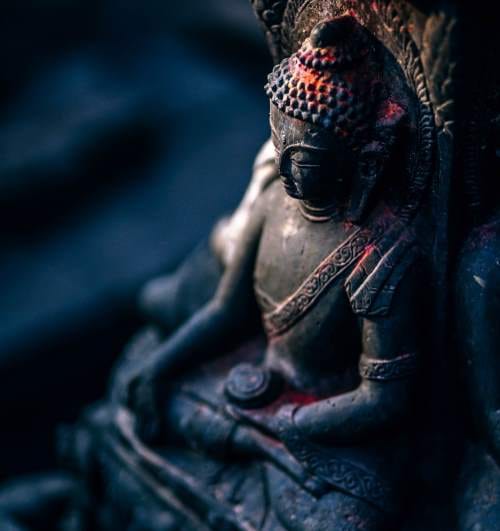
A few of my favorite Zen quotes which capture the depth of spiritual awakening. If you have any favorite quotes, please feel free to share in the comments section. “Sitting quietly, doing nothing, Spring comes, and the grass grows by itself.” Zenrin Kushû ”I have not heard of a single Buddha, past or present,who has been enlightened by sacred prayers and scriptures.”- Bassui If you cannot find the truth right where you are, where else do you expect to find it?- Dogen Before I had studied Zen for thirty years, I saw mountains as mountains, and waters as waters. When I arrived at a more intimate knowledge, I came to the point where I saw that mountains are not mountains, and waters are not waters. But now that I have got its very substance I am at rest. For it’s just that I see mountains once again as mountains, and waters once again as water.- Ch’uan Teng Lu What is this mind?Who is hearing these sounds?Do not mistake any state forSelf-realization, but continueTo ask yourself even more intensely,What is it that hears?- Bassui However deep your Knowledge of the scriptures,It is no more than a strand of hair In the vastness of space;However important appears Your worldly experience,It is but a drop of water in a deep ravine. –Tokusan All sentient beings are essentially Buddhas.As with water and ice, there is no ice without water;apart from sentient beings, there are no Buddhas.Not knowing how close the truth is,we seek it far away –what a pity! Hakuin Although gold dust is precious, when it gets in your eyes, it obstructs your vision. Hsi-Tan I would rather sink to the bottom of the sea for endless eons than seek liberation through all the saints of the universe. Shih-t’ou It is as though you have an eyeThat sees all forms But does not see itself.This is how your mind is.Its light penetrates everywhere And engulfs everything,So why does it not know itself?Foyan “It is present everywhere.There is nothing it does not contain.However only those who have previouslyplanted wisdom – seeds will be ableto continuously see it.”– Dogen Enlightenment is intimacy with all things.- Dogen Peace isn’t luck. For six years stand facing a silent wall,Until the ‘you’ of your face, Melts like a candle.Ikkyu I’m in it, everywhere. What a miracle!Trees, lakes, clouds, Even dust. – Ikkyu When mortals are alive, they worry about death.When they’re full, they worry about hunger. Theirs is the Great Uncertainty. But sages don’t consider the past. And they don’t worry about the future. Nor do they cling to the present.And from moment to moment they follow the Way.Bodhidharma My legacy- What will it be?Flowers in spring, The cuckoo in summer,And the crimson maples Of autumn …Ryokan In this way and that I have tried to save the old pailSince the bamboo strip was weakening and about to breakUntil at last the bottom fell out.No more water in the pail!No more moon in the water! Chiyono’s enlightenment poem “Well versed in the Buddha Way, I go the non-Way. Without abandoning my ordinary person’s affairs.The conditioned and name-and-form, all are flowers in the sky.Nameless and formless, I leave birth-and death.” Pang Yun, Two Zen Classics “Clambering up the Cold Mountain path,The Cold Mountain trail goes on and on:The long gorge choked with scree and boulders,The wide creek, the mist-blurred grass.The moss is slippery, though there’s been no rainThe pine sings, but there’s no wind.Who can leap the world’s tiesAnd sit with me among the white clouds?”Cold Mountain Poems, by Han Shan Where can I find a man who has forgotten words so I can talk with him?”Zhuangzi” Those who are awake, live in a state of constant amazement. ― Buddha “Men of the world who value the Way all turn to books. But books are nothing more than words. Words have value; what is of value in words is meaning. Meaning has something it is pursuing, but the thing that it is pursuing cannot be put into words and handed down. The world values words and hands down books but, though the world values them, I do not think them worth valuing. What the world takes to be values is not real value.” ― Chuang Tzu, The Complete Works of Chuang Tzu
Right Action

Life is full of situations which demand actions. We have to respond to situations, and respond correctly. But a seeker is always second guessing…
Spirituality- Why Modern Thinkers Use This Word

Atheists have passionately distanced themselves from the word spirituality; the word makes them extremely uncomfortable. And yet, some…..
My Desire to Become Desireless

In almost all spiritual traditions, desire is seen as an impediment to happiness, the cause of suffering and illusion. Giving up desire is….
The Mosquito Dilemma – Is Compassion Always the Right Choice?

The core of living a spiritual life is non-violence and respect for all living beings. I have been cultivating the virtue of compassion for….
How to Be Happy In Life – Finding Real Happiness within Yourself

It was a beautiful sunny afternoon as I walked on a small path along the foothills of the Himalayas, thinking about why it was so difficult finding happiness. I was going through a rough patch in my life and I was quite stressed and unhappy. I sat down under a large tree, watching the mountain ranges and the clouds floating by. I tried approaching the unhappy state of my mind through different angles. I looked at my past frustrations and anxiety. As I delved deeper into the whole complex of happiness and unhappiness I realized the unsettling truth about my thoughts. Every unhappy thought boiled down to a basic pattern – I will be happy when I have x I will be happy in life when I have sorted a particular life issue. The entire conversation in my head was – I will be happy tomorrow, when things get better. The mind kept grasping at the future, forever unhappy. I knew I was onto something. I closed my eyes and started going deeper into my consciousness, the pure sense of presence. This deeper state of awareness always helped me in gaining valuable insights into my own mind and its conditionings. Suddenly, a flash of insight pierced through my awareness. In an instant, I could see the error in my thinking, the million times I told myself how the next day, the next turn, the next year would be happier, better and free of worries. I was forever waiting for the right circumstances for happiness to arise. As I slowly drifted into contemplating deeper, a question started bubbling up – Why do we always try finding happiness in the future, why not today, why not this very moment? As I delved deeper into the question; I could perceive layers and layers of mental conditioning, resting on this one fundamental question. The question was like a knife, cutting through a life time of false mental construct. We live in an imperfect world, with millions of issues to take care of every second. How can I be so foolish as to let happiness be dependent on internal and external factors? The circumstances will never be perfect, ever. Immersed in the insight, I felt a profound sense of peace rushing up my body. Stillness engulfed me; my consciousness was absorbed into itself; the anxiety and stress which had troubled me for months melted away, replaced by joy and happiness. I spent the next few days integrating and exploring this insight. Finding happiness within yourself is dependent on a vast number factors coming together. A whole set of circumstances need to be aligned for real happiness to arise. I call this the Infinite List of Happiness (Infiness for short) It is a daunting list, and as you read through this, you will realize why it is impossible to find real lasting happiness. Infinite List of Happiness – things we need to be happy in life Below is the list of things needed to make us happy. Even if one of them goes out of sync, you lose your inner balance and become stressed and unhappy. I encourage you to spend some time on the list, going through each item and contemplating how it affects your happiness. Life events – These can be a source of intense depression and chronic unhappiness for us. Death of a loved one Breakups Divorce Betrayal by a close friend of family member Financial –Financial insecurity is the leading cause of stress and anxiety. You need to have reasonable financial security and a steady source of income for you and your family. This also includes – No immediate threat to our livelihood You don’t hate your job, career, boss and colleagues No stress of managing finances Taxes and legal paperwork all taken care of No litigation or court cases Relationships – How many times have you been stressed, angry or thoroughly frustrated with your relationships? To be happy in life, we need reasonable good relationships with a whole lot of people, including – Relationship with partner Relationship with children Relationship with parents Relationship with siblings Relationship with in laws Relationship with manager/boss Relationship with relatives Relationship with close friends Body – Our body needs to be reasonable healthy. We also need to be happy with how our body feels, looks and functions. This includes- No serious illness No debilitation chronic illness Brain should be in reasonable health Mind – All the factors in this list influence the mind and the mind influences them. Some incidents play like a broken record, while some push our buttons, making us sad, angry and dejected. This includes – Past sufferings, trauma and hurt Psychological problems like anxiety, depression, mood disorders etc. Self-blame and regrets Upsetting emotions like anger, jealousy and sadness Social –We all need social acceptance. Being a part of your social group and respected by our peers can make us happy and content. This includes- You feel that you are respected among the society You do not compare yourself with others wealth, assets and attainments. You have close friends and social contacts you can fall back on. Your neighbors are good with you. Psychological fulfillment – This includes- You have sense of purpose You do not feel life is empty and meaningless You have clarity about your future You are not confused. Everyday life – These include minor everyday issues, which, if not sorted, can cause temporary unhappiness. The house is all fixed up, no major issues The grocery/shopping is all done Bills paid on time Bank accounts, investments are all taken care of Misc – These include the political and economic environment we live in- No natural calamity threatens your region No threat of war/terrorism where you live No threat of economic downturn Reading through the entire list is exhausting and I am sure your unique life situation will have tons of other factors which I have not covered above. (If you would like me to add more factors to the Infiness ,
Finding Inner Peace of Mind – How to be Calm Amid Chaos

Note- I had this insight in 2002 and used it successfully to become peaceful when faced with emotional disturbances. This is a basic technique and can be used as a tool to pacify the mind. If you are an advanced seeker on the path, you might not require this. Jane was walking across the hallway towards her desk. She saw Hannah near the coffee machine, hesitated and said, “Hi”. Hannah totally ignored her, stirring sugar into her coffee, her face cold and distant. Jane felt a pang of hurt and anger. She felt stupid for acknowledging Hannah. Humiliated and angry, she mumbled “Backstabber” and walked off. Incidents like these play havoc with our peace of mind. I am sure you must have experienced a few of these disturbing emotions yourself. For example – Lately my manager has been very curt with me. Has he started disliking me? Why did the neighbour just brush me off? The man in the store was so rude. It is difficult to let go of these anxious thoughts, they keep playing inside our minds like a broken record, the stress lingering on, destroying our inner mental peace. We feel victimized, agitated, depressed and stressed. Add up these bursts of anger and resentment that occur throughout the day – with your partner, boss, etc. and they amount to a whole lot of unhappiness and suffering. Finding inner Peace of mind seems almost impossible in these situations. In a world filled with arguments and disharmony, we long for scraps of inner calm, trying to find inner peace. But who is going to take the first step towards making it all better? Who will restore peace and balance in the world? It’s You- The Peace Shifu. (Shifu is a Chinese word, which means master or skillful person) Angry Me, Angry You- The beginning of suffering It’s a warm sunny day and you are cheerfully driving on a narrow street. Suddenly, a car cuts across and overtakes you and speeds away. What is your usual reaction? “What a jerk! Doesn’t know how to drive. Stupid ****.” You are angry and upset. Your mind is thrown off balance. You curse the driver, maybe honk your horn. Applying compassion in these situations is difficult. The reason is simple – in our mind, we have been wronged. The other person has wronged us and we have been unfairly treated. (Even primates have an inherent sense of fairness: refer to this scientific research article. You try to forgive the driver and try to maintain your peace of mind. But it doesn’t happen. Anger and resentment hijacks our brain. Peace Shifu – Finding inner peace of mind and calm within yourself Let’s take the example of the speeding car again. You curse the driver. You get angry. Maybe you say something angry to your wife, who reacts, which makes you even angrier. So now your wife is also upset. Things start going downhill pretty fast from there. You and your partner don’t speak for the entire day. I call this ‘add-on suffering’. Now let me give you a different perspective of the event, from the speeding driver’s point of view. The person who overtook you just received a call that his wife had a massive cerebral hemorrhage and the chances of her survival are bleak. He is distraught, trying to reach the hospital, thinking worst thoughts about his beloved. He has two children, aged four and nine. You couldn’t see it, but as he passed you, tears were streaming down his eyes. His wife means the entire world to him, and now she lies on her deathbed. How will he carry on without her? His innocent young children can’t even comprehend the immense loss. How will you respond now? Will you still call him names and get angry? Or will you be compassionate and just hope he gets to the hospital on time, maybe you would even help him in getting there. When the situation has been reframed, it makes you peaceful and compassionate. You are not angry and stressed anymore. You drive on the highway of life, finding peace within yourself. Why does it work? Because now you do not feel wronged anymore. Your mind feels the action was justified, given the circumstances. I call the reframing of a situation Alternative Narrative or AltNarrate, a key tool for being a Peace Shifu. AltNarrate – the key to mental peace and inner calm Most of the time we instinctively devalue other people’s circumstances by assuming the worst in them. We assume they are rude and behave stupidly because that is their personality. They behave badly because that’s what they are, either good or bad. Aren’t we making assumptions? That lady who was a little off at the customer desk while helping you? You took offence and were ready to talk to her manager. But what if she had just found out that her husband was cheating on her? Would you still judge her as being rude, or give her a little leeway? If you didn’t practice being a Peace Shifu, you would have complained to the manager, leading to further add-on suffering for her, yourself and even the manager. Maybe it would have escalated, with a follow up from the HR department. A single action of yours can lead to multiple levels of disharmony and suffering for multiple people. A Peace Shifu understands this commonly overlooked phenomenon. But it is difficult to invoke compassion and empathy in these situations. The brain rebels and hijacks our thought process. What I have learned in the past few years is that the mind needs reasons for compassion, peace and harmony. You need to deal with the mind at its own level. Once the mind finds reasons to be compassionate and kind, it calms down pretty quickly! The four simple steps to being a Peace Shifu There are four simple steps to being a Peace Shifu and making the world a better place- 1. Finding peace within