
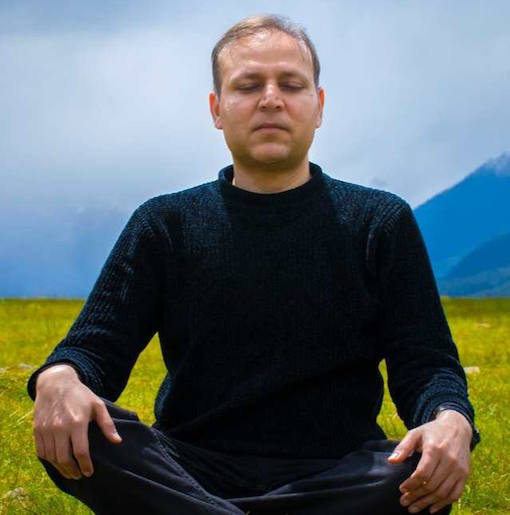
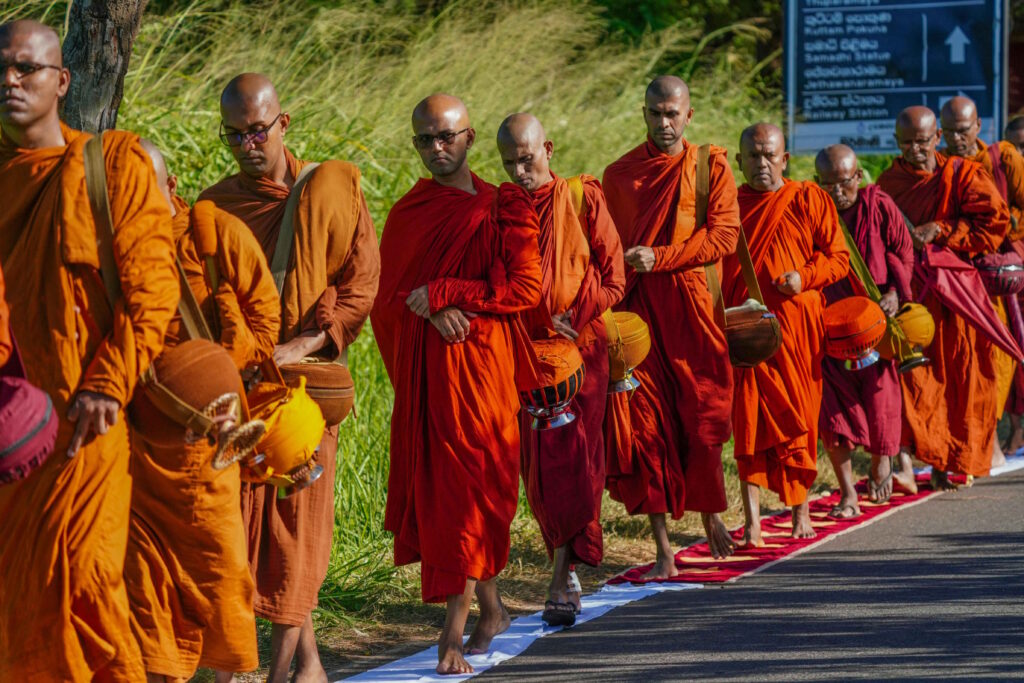
Three traditions claim the Buddha as their source, yet they look and sound remarkably different from one another. A Theravada monk in a saffron robe reciting Pali texts in a Sri Lankan temple, a Zen practitioner in Japan sitting in silence before a plain wooden altar, and a Tibetan tantric adept visualising a wrathful deity in vivid colour — all regard themselves as followers of the same teaching. The differences between them are real and significant. They are also easier to understand once you know what question each tradition was most urgently trying to answer.
Buddhism has approximately 500 million adherents worldwide. According to EBSCO’s research database, the religion has three main branches: Theravada, Mahayana, and Vajrayana — each divisible further into numerous geographical and doctrinal schools. These are not sects in the Western sense, where one group claims the others are wrong. They are, as the tradition itself tends to see them, alternative paths shaped by different historical conditions, philosophical temperaments, and understandings of what liberation requires.
Understanding these paths also illuminates the foundation they share — the core teachings of Buddhism — and why those teachings took such different forms as they spread from India across Asia.
Theravada: The Way of the Elders
Theravada, which means Way of the Elders in Pali, presents itself as the most conservative form of Buddhism — the one most directly continuous with the original community established by the Buddha. It is the oldest surviving school, with roots stretching back to the Fourth Buddhist Council held in Sri Lanka around the first century BCE, where the Pali Canon was committed to writing for the first time.
The Pali Canon is the only complete Buddhist scriptural collection in an ancient Indian language that survives in its original tongue. Theravada regards it as the authoritative record of the Buddha’s teaching, and its doctrines stay close to what can be derived from that canon. The tradition’s approach to liberation is built around the figure of the arahant — the fully liberated individual who has eradicated all defilements and will not be reborn. The arahant is the Theravadin ideal of the awakened person.
Theravada gives particular emphasis to monastic life. The Vinaya, or code of monastic discipline, is treated with great seriousness, and monks are regarded as the primary bearers of the Dharma. Lay practitioners earn merit through generosity, ethical conduct, and support of the Sangha, while monks focus on the full range of the path including intensive meditation. The central meditation practices are samatha (calm abiding) and vipassana (insight), with vipassana particularly concerned with directly observing impermanence, or anicca, as it manifests in moment-to-moment experience.
Theravada spread from India to Sri Lanka in the third century BCE, largely through Emperor Ashoka’s missionary effort. From Sri Lanka it spread to Southeast Asia — Myanmar, Thailand, Cambodia, Laos — where it remains the dominant form of Buddhism today. The vipassana tradition that emerged from Burma in the twentieth century, associated with teachers like Mahasi Sayadaw and later the popularised Goenka retreat model, has carried Theravada insight practices into the global mindfulness movement.
Mahayana: The Greater Vehicle
Mahayana emerged around the first century CE as a movement that considered the conservative schools to be incomplete. Stanford scholar Paul Harrison, who has written extensively on Mahayana origins, describes the movement as motivated by the sense that mainstream Buddhism was not going far enough — that people needed not just to liberate themselves from suffering but to liberate others and aspire to full Buddhahood. This aspiration gave rise to the bodhisattva ideal that defines Mahayana.
The bodhisattva is a being who has generated bodhicitta — the mind of awakening — and made a vow to attain full enlightenment for the benefit of all sentient beings. The bodhisattva path may take aeons, passing through ten stages called bhumis. This is a radically different orientation from the Theravadin model. Where the Theravadin ideal is the arahant who achieves nirvana and exits the cycle of rebirth, the bodhisattva voluntarily remains in the cycle to serve others. Compassion (karuna) and wisdom (prajna) are co-equal virtues, not sequential ones.
Mahayana also brought an enormous expansion of scriptural literature. The Mahayana sutras, which the tradition regards as genuine teachings of the Buddha disclosed to prepared audiences, include texts like the Heart Sutra, the Diamond Sutra, the Lotus Sutra, and the Vimalakirti Sutra. Philosophically, Mahayana introduced the doctrine of sunyata — emptiness — in a more radical form than had appeared in earlier Buddhism. The philosophy of Nagarjuna established that not only persons but all phenomena are empty of inherent existence, and that this emptiness is the very condition for their arising in dependence on one another.
Nisargadatta Maharaj, whose teaching in many ways resonates with Mahayana’s emphasis on the primacy of pure awareness, noted that the sense of limitation — the sense of being a separate, bounded person — is itself the core problem. Mahayana’s philosophical project, from its analysis of emptiness to its account of the bodhisattva’s boundless compassion, is essentially about dismantling the walls of that limitation.
Mahayana spread along the Silk Road into China, where it generated new schools including Chan (later Zen in Japan), Pure Land, and Tiantai. It also spread to Korea and Vietnam. In Japan, Zen’s radical emphasis on direct insight stripped the tradition to its barest essentials: sitting, looking, and the direct encounter with what is actual rather than what is conceptually projected.
Vajrayana: The Diamond Vehicle
Vajrayana, sometimes called Tantric Buddhism or the Diamond Vehicle, is the third major stream. It is historically an offshoot of Mahayana, sharing its philosophical foundations — including the bodhisattva ideal and the Madhyamaka understanding of emptiness — but adding an esoteric dimension of practice that claims to offer a faster route to enlightenment.
The distinctive technologies of Vajrayana include deity yoga (the visualisation of a buddha or bodhisattva as the meditator’s own enlightened nature), mantra recitation, mudra (ritual gesture), and working with the subtle energies of the body through practices related to the channels, winds, and drops described in Tantric physiology. These practices are undertaken within a framework of empowerment (initiation by a qualified teacher), samaya (sacred commitment), and direct pointing-out instruction that shows the practitioner the nature of their own mind.
Vajrayana takes as its premise that the ordinary confused mind and the enlightened mind are not two different things. Buddhahood is present right now, obscured by habitual patterns but not fundamentally absent. The practices of Vajrayana are designed to strip away the obscurations and reveal what was always already present. This is why Vajrayana is sometimes called the path of fruition — it takes the result, enlightenment, as the path. Mahamudra, the Great Seal, is Vajrayana’s highest teaching, pointing directly to the nature of mind itself as primordially pure and aware.
Ramana Maharshi’s method of self-enquiry — asking “Who am I?” until the questioner dissolves into the awareness from which it arose — shares a structural resemblance to Vajrayana’s pointing-out instructions. Both direct attention away from its objects and back toward the awareness that is doing the attending. Both claim that what is found there is not an entity but a recognition.
Vajrayana developed primarily in India between the seventh and twelfth centuries CE, and was transmitted to Tibet beginning in the eighth century. When Buddhism was largely destroyed in India by the end of the twelfth century, Tibet became the primary custodian of the Vajrayana tradition. The four main schools of Tibetan Buddhism — Nyingma, Kagyu, Sakya, and Gelug — all represent different lineages and emphases within the Vajrayana framework, though they share its foundational orientation.
Where the Paths Converge
The differences between these three traditions are real and should not be smoothed over. Theravada maintains that the Mahayana sutras are not genuine words of the Buddha. Mahayana holds that the Theravadin ideal of the arahant is a lesser vehicle that stops short of full Buddhahood. Vajrayana claims that without access to tantric methods, liberation takes many lifetimes longer than it need. These are substantive doctrinal disagreements, not minor variations.
But the disagreements sit within a shared framework. All three traditions accept the Four Noble Truths and the analysis of no-self, or anatta. All three accept that suffering arises from craving and that craving is rooted in the illusion of a separate self. All three affirm that liberation is possible and that the path to liberation involves the cultivation of ethical conduct, meditative stability, and penetrating insight.
The question each tradition asks differently is: insight into what, exactly? Theravada answers: insight into the impermanence, unsatisfactoriness, and selflessness of the five aggregates, leading to the cessation of clinging. Mahayana answers: insight into the emptiness of all phenomena and the capacity for universal compassion that arises when the walls of self-concern dissolve. Vajrayana answers: recognition of the nature of mind itself — luminous, empty, and unobstructed — as the ground of all experience.
These are different emphases rather than contradictions. A practitioner grounded in Theravadin vipassana who reads Nagarjuna, or a Tibetan tantric practitioner who also sits in the Zen mode, is not confused. They are drawing on a river that has many channels.
Choosing a Path
The practical question of which tradition to follow, if any, is less about finding the correct one than about finding the right fit for your temperament, circumstances, and what the practice is actually doing in your life. A person drawn to rigorous, systematic investigation of moment-to-moment experience may find Theravadin vipassana speaks most directly to their character. A person moved by the aspiration to serve others and drawn to a philosophical framework that integrates wisdom with compassion may find Mahayana more alive for them. A person who works best with embodied, energetic practices and responds to the directness of pointing-out instruction may find Vajrayana most resonant.
None of these traditions is for beginners who are merely curious. Each requires sustained commitment and, in most cases, a qualified teacher. What all three share is a commitment to the same fundamental honesty: look at your experience, not at what you hope your experience might be. The path of spiritual awakening runs through all three traditions and does not care which flag you are flying when you arrive.
It is worth noting that in the context of satsang and direct inquiry, all three traditions are ultimately invitations to a direct encounter with what you actually are rather than what you have believed yourself to be. That encounter does not belong to any tradition. The traditions are the scaffolding. The encounter itself is what the scaffolding was built to reach.
Theravada shows the precision of analysis. Mahayana opens the heart to include all beings. Vajrayana reaches directly for recognition of the ground. Each knows something the others know too, in different words. The path worth walking is the one that actually walks you further in.