
Screen & Silence: Confronting the Ego’s Escape

Modern technology has become the perfect tool for escaping difficult emotions. It offers infinite escape to a mind conditioned to avoid looking inwards. The addiction to the endless dopamine hits from phone is a symptom of a deeper problem: the inability to be with what is. I can clearly see that every notification is a rupture. It is like throwing stones one after another into a clear pond, creating thousands of ripples. The mind is disturbed with each ripple of external demand. Clarity dissolves into fragmentation. But this doesn’t end here. Now imagine you are not only throwing stones in the pond, but there are noisy jet boats and jet skis travelling across the pond. This is what happens when attention is fragmented across multiple devices. This fragmentation cuts us from our natural state of presence. There is a deep saying in Zen “When walking, walk; when eating, eat.” Simplicity is the key to being in the present. But the old zen saying is now out of the window. We text while we walk; we scroll while we eat. The body is here, but the mind is lost in a digital haze. Presence Interrupted Presence is the ego’s death. In the now, there is no ‘I’ to protect, no story to uphold, no past to regret, no future to anticipate. The ego sensing its dissolution in the vast stillness of the presence, mobilizes its most cunning weapon: distraction. The smartphone has become an egoic tool par excellence. It promises engagement but delivers unconsciousness. The endless feed of information keeps the mind on the surface, far from the depths of direct experience. Distractions exploit the brain’s reward system. Every notification triggers a release of dopamine, reinforcing the behavior. Spiritually, this results in a far greater cost: the erosion of inner silence. Silence is not merely the absence of noise; it is the canvas upon which truth reveals itself. Reclaiming Presence: Ancient Practices in a Modern World The true antidote to digital distraction is radical presence. And this requires effort and deep attention. Mindful Observation: Before you reach for your phone, pause. Feel the impulse. Watch the mind grasp for stimulation. In that moment of observation, you step out of identification with the mind and into the role of the witness. The phone loses its grip when seen for what it is: a tool, not a master. Breath as Anchor: The breath is the simplest, most ancient doorway to presence. It cannot be digitized or outsourced. Inhaling, know you are inhaling. Exhaling, know you are exhaling. This practice, so seemingly mundane, dismantles the mind’s momentum and grounds attention in the living now. Silent Sitting: Sit without a phone. Let thoughts rise and fall like clouds in the sky. Resist the urge to escape. In this stillness, the original nature of mind reveals itself. Returning to Presence Where attention goes, life flows. In a distracted state, life remains on the surface, skimming across screens and shallow interactions. When the mind is not divided, even mundane tasks become portals to the infinite. Washing dishes becomes a meditation; walking becomes communion with existence. The world regains its vividness. The ordinary, when seen with undivided attention, becomes extraordinary. The conditioned mind resists stillness. It equates silence with emptiness, not realizing that this emptiness is fullness itself. Beyond this fear lies the treasure. Presence reveals that you are not the curated digital persona, but the timeless awareness that watches all phenomena come and go. The Eternal Now The digital world will continue its siren call. Notifications will persist, algorithms will evolve, and distractions will multiply. But the seeker who has tasted the stillness of now will no longer be deceived. Presence is not found in escaping technology, but in remaining untouched by its pull. I do not speak of abstract ideals but of the lived reality of our present times. All distractions are shadows cast by the mind’s fear of facing itself. Technology will evolve, but presence remains untouched and unchanging. The question is: Are you willing to die to distraction and be reborn into presence?
The Cereal Aisle – Searching for Enough in a World of Plenty

In the quiet early hours of the morning stillness, I walk to the nearest supermarket to pick up some breakfast essentials. As I enter the huge supermarket, I am greeted with shelves perfectly arranged with hundreds of choices, stretched out in all directions. No matter which supermarket I walk into, I am met with an excess that verges on bewilderment. I head to the cereal aisle. There are rows of boxes filling every space, each one promising health, happiness and contentment. Corn flakes, puffs, clusters, granola, muesli, honey-drizzled, chocolate-dusted, high-protein, gluten-free, ancient grains, the list goes on and on. I see a young woman frozen in the aisle, paralysed by the endless choices. Why does such bounty not yield contentment? What does it mean that, with shelves overflowing, peace remains so distant? Selecting a simple cereal can morph into second-guessing and a battleground of identities. The health-conscious identity fights with the child identity who wants sugary treats. The restless mind wants to pick one and move on. The question is no longer, “What will keep the body alive?” but “What will make this day begin with meaning, with comfort, with health, with happiness?” Beneath each decision,there is a quiet hidden plea: let this choice be the right one, let this be the perfect choice. Yet once breakfast is finished, the same questions often return. The deep hunger is not for food alone. It is tempting to believe that choice is always a blessing, that more is always better. Yet, psychological research reveals otherwise. There is a point where more options become a source of stress and regret. With each added possibility, the burden of responsibility grows. Every option not taken becomes a silent judge, whispering of roads not traveled and lives not lived. This is the paradox of freedom: the more choices available, the greater the risk of missing out, of making the “wrong” choice. The consequence is not contentment, but anxiety and FOMO. Beneath all this, the body holds onto stress. The nerves become tense and the mind grows restless. The hunger that remains is not physical at all, but a wish for peace and wholeness. This need cannot be answered by what sits on a shelf. What is the way out? How can peace be found in a world of endless cereal boxes and limitless choices which breeds anxiety? There is an ancient wisdom in the practice of enough, a practice forgotten by a world obsessed with more. To accept that no product and no possession will resolve the fundamental questions of existence is to find freedom in the midst of plenty. In the cereal aisle, there is a gentle lesson waiting. Take a box. Let the decision be simple. Begin the morning without regret or second-guessing. Real nourishment comes not from getting everything right, but from meeting the day as it is, and meeting ourselves with kindness. The abundance remains, but it no longer oppresses. The choice is made, and the morning proceeds. There is no regret for what was left behind. The ritual of breakfast becomes a meditation on the ordinary, a way to remember that contentment is not found in endless searching, but in the gentle acceptance of this moment, just as it is. The world will continue to offer new boxes and new dreams. But peace grows in the space where we pause, where we come to the wisdom that we are already enough.
The Dark Night of the Soul and the Path to Awakening

The dark night of the soul isn’t just words for me. It was a dark period of my life that stripped me of everything I thought I knew. If you’ve been through it, you know it is not poetic or romantic. It is a brutal undoing. What I learned is that the dark night of the soul is not only a spiritual crisis. It is also a neurological storm, a psychological unraveling, and at the same time, an ancient universal passage. For me, it began when the first taste of awakening faded. I had touched states of ecstasy where the whole universe was pure consciousness, where everything shone with a sacred glow. But the months passed, and those states slipped away. What replaced them was not peace, but a deep darkness that kept growing. This is the part no one warns you about. When bliss comes, the ego secretly whispers, “Yes, this is mine now. This will never leave.” I started chasing the bliss. More meditation. More retreats. More teachers. Every moment I wasn’t in bliss, I felt I had failed. I became the most miserable kind of seeker: the one who has tasted nectar but keeps finding only dust in his mouth. The dark night of the soul was not only spiritual, it was social. People around me could not understand what was happening to me. To them I was wasting my life. Some thought I had gone mad. At one point, a rumour spread that I was in rehab for drugs, when all I had done was attend a meditation retreat. The isolation cut deep. I remember walking through my town and hearing whispers. That loneliness was its own kind of dark night. I also began to see the psychology beneath it. Old wounds I had buried were surfacing. Childhood fears, the need to be loved, the shame of not fitting in. The dark night is not only cosmic emptiness. It is the subconscious knocking on the door, demanding to be felt. I sat in my room and cried for hours. Looking back, I see why it happened. The mind is built to cling. The brain is wired to repeat what brings reward. When bliss came, every circuit of my nervous system wanted to hold on. But reality is fluid. No state can stay forever. The dark night comes when the nervous system realises it cannot control the truth. It panics. What made my night darker was the idea of enlightenment itself. Every glimpse I had was rejected as “not it.” Bliss wasn’t enough. Stillness wasn’t enough. Only some permanent enlightenment would do. I became blind to what was already here. Dark Night as a Teacher But here is something people don’t write about: the dark night is also a teacher of compassion. When you are broken and you can no longer pretend to be strong, you begin to see the silent suffering in everyone around you. You look into someone’s eyes and realise they too are carrying hidden pain. Before the dark night, I wanted to be enlightened. During it, I just wanted to understand why life hurts so much. That shift was important. Another insight: the dark night burns away spiritual arrogance. Before it, I thought I was special. I thought I was progressing. After it, I saw that life does not care about your timelines. How to Overcome the Dark Night of the Soul People often ask, “How do you get out of the dark night?” My honest answer is you don’t escape it. You let it do its work. It is not a prison. It is a fire. If you try to run, you only burn slower. For me, the turning point was when I gave up. Truly gave up. I remember sitting one night, exhausted by years of seeking. I said to myself, “I can’t do this anymore. If enlightenment comes, let it come. If it doesn’t, I don’t care.” In that surrender, something shifted. It was simple. A sense of arriving where I had always been. What followed was a deep ordinariness. Life was not split into “spiritual” and “worldly” anymore. Washing dishes felt the same as meditation. Talking to a friend carried the same silence as sitting in a cave. I had been looking for the extraordinary, but what I found was the simplicity of being here. Here is another thing rarely said: the dark night may visit more than once. Life is like layers. Each time you think you have arrived, another veil might fall. And this is not a failure, it is deepening. So if you are in the dark night, know this: you are not broken. You are being dismantled. What you think is loss is actually space being made. What feels like meaninglessness is the death of false meaning. And what seems like abandonment is life removing every crutch so that you stand on what has always been unshakable. Common Spiritual Traps that Make It Harder The dark night of the soul is already heavy enough. What makes it unbearable are the traps we fall into without realising. I went through most of these traps myself. Something has gone wrongThe first mistake is thinking something has gone wrong. The seeker assumes they’ve failed. You tell yourself, “I must have done something wrong, I have lost my way.” That voice of self-blame is like throwing stones into an already sinking boat. The truth is, nothing has gone wrong. The night is part of the path. It is not punishment, it is purification. I need those spiritual states backThe second mistake is trying to get back what you had. I remember those months after my first awakening, desperate to bring back the ecstasy. Every day I measured myself against that past high. And every day I came up short. What I did not see is that chasing the past is the surest way to blind yourself to what is here now. If bliss wants to come, it comes. If silence wants
Why Spiritual Awakening Feels Lonely

Why Spiritual Awakening Feels Lonely at Times There are moments on this spiritual path that feel like being cast adrift. The old way of being that once felt normal has fallen away. Conversations that once excited you now taste flat. Friends who were once companions feel far away. You�re here, but you are not quite here in the same way anymore. And it can feel unbearably lonely. I know these feelings well. You look around for someone who understands, and it seems no one does. Part of the ache comes from realising that those you love cannot follow you. You might try to describe the stillness that expands beyond thought. You might speak of how your identity dissolved. To them it sounds mumbo jumbo, or worse, like delusion. Loneliness in awakening is not proof that something has gone wrong. It is often the sign that something deeper has begun. I have sat with seekers in this stage. One man told me, �I feel like a ghost at my own dinner table.� Another whispered, �I can�t tell my family what I�m going through. They would think I�ve lost it.� Their eyes carried the same question: why does truth feel so isolating? The Shattering of Old Belonging Belonging and relationships are built on sameness. We bond over shared tastes and shared dreams. We belong to families and cultures with their rituals and rhythms. These give us identity and comfort. The brain itself thrives on these bonds. Neurobiology shows that oxytocin, the �bonding hormone,� fires when we feel accepted and mirrored by others. The social brain wants sameness. It wants safety in numbers. But awakening unsettles this. It is like pulling a thread from a woven cloth. Slowly, the patterns unravel. What once fit, no longer does. You find yourself questioning conversations that revolve around gossip. You notice the masks people wear, masks you once wore yourself. And as those masks slip away, the old belonging feels like a party you can no longer attend. The loneliness here is real. The brain, which craves the familiar resonance of the tribe, suddenly finds itself in an empty space. It has not yet built new pathways for a deeper belonging. Loneliness and the Nervous System From a psychological and biological view, loneliness is not just an idea. It is visceral. The nervous system interprets social disconnection as danger. When we feel isolated, the amygdala lights up, scanning for threats. Cortisol, the stress hormone, rises. The body goes into subtle fight or flight. This is why loneliness during awakening can feel not just sad, but fearful in the body. The chest feels tight and the skin itself longs for touch. This is important to recognise. Loneliness is not only about being �misunderstood.� It is the nervous system struggling with the loss of its old signals of safety. You are stepping into unknown territory, and your body is wired to fear the unknown. The Mystic�s Solitude Every tradition has spoken about this solitude. Mystics often wrote of awakening and how it opened them to a vastness no one around them could share. Ramana Maharshi sat in silence in the caves of Arunachala. Rumi turned inward, writing verses that only a handful of companions could receive. The Buddha left the palace, sat under the Bodhi tree, and faced the long night alone. Yet, if you read closely, their loneliness was not sterile. It became fertile ground. Out of solitude, Rumi found the Beloved. The Buddha�s aloneness flowered into compassion for all beings. Loneliness, when walked through, turns into another name for intimacy with the infinite. The Ordinary World Feels Strange The spiritual path feels lonely because ordinary life does not stop. Bills still need to be paid. Children still need to be fed. Colleagues still complain about the same office politics. But you are not the same. The conversations feel like echoes from a world you no longer live in. Psychologists call this cognitive dissonance. The inner map no longer matches the outer world. The brain scrambles to reconcile them, often creating a sense of alienation. It feels like living in two dimensions at once. Part of you is infinite and free. Another part still has to queue at the grocery store. Loneliness is grief�s companion. You are mourning the life that no longer fits. The friendships that fade. The conversations that no longer make sense. It is a sacred mourning. Let it happen. Cry if you must. Sit in the ache without trying to fix it. On the other side of grief lies a deeper belonging, but you cannot skip the mourning. Why Loneliness Is a Teacher If you can stay with it, loneliness itself begins to teach. It shows you how much of your identity was woven from the eyes of others. It reveals how much you depended on approval and mirroring. It exposes the hunger of the nervous system for safety in company. And then, gently, it begins to show something else. It shows you that you can sit in a room alone and still feel whole. That presence itself can hold you. That the ground of being does not abandon you. Slowly, loneliness becomes solitude, and solitude becomes intimacy with what is. The Larger Belonging What begins as loneliness can open into a belonging so vast it is difficult to describe. Mystics call it union. Psychologists might call it self-transcendence. Neurobiology shows it as the quieting of the default mode network in the brain, the circuit that creates the story of a separate self. When that circuit quiets, boundaries blur. This is the deeper belonging. But to reach it, you often walk first through the desert of loneliness. Practical Ways to Walk Through the Loneliness Sit with the Body When loneliness burns, notice where it lives in the body. Maybe in the chest, the gut, the throat. Place a hand there. Breathe slowly. Let the nervous system know it is safe. You are here. Find Companions of the Heart Not everyone will understand,
From Clarity to Chaos and Back Again: Breaking Free from the Spiritual Pendulum
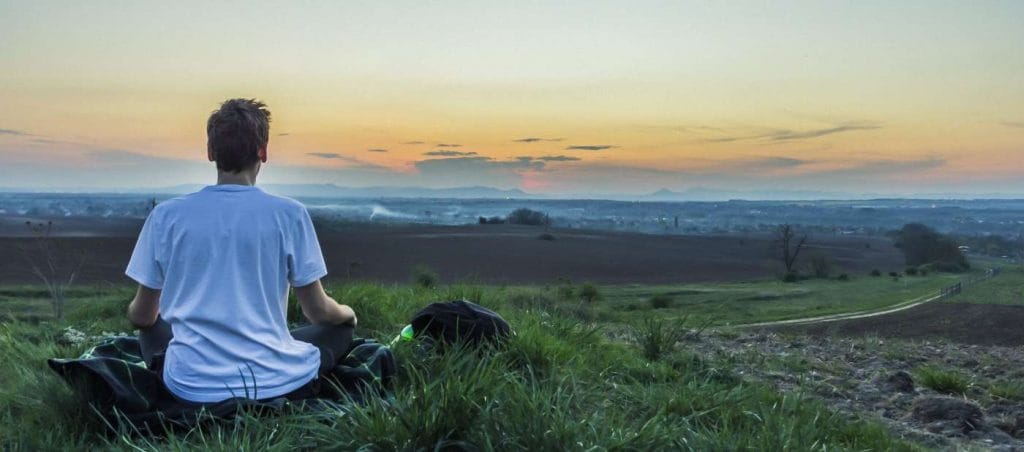
The spiritual path is not a straight line. It rises in moments of clarity, falls into confusion, rises again with new insight, then sinks once more into suffering. Some days, you feel boundless, as if awakening is just within reach. Other days, the old patterns return with a force. This is the yo-yo of seeking, the oscillation between expansion and contraction, between glimpses of truth and the pull of conditioning. Why does this happen? Why does the light seem so near, yet so easily lost? And is this fluctuation a mistake, or does it reveal something deeper? The Illusion of Progress The mind is obsessed with progress. It wants a path with achievements and a final destination where all struggle ends. It believes that awakening is a ladder where you move one step at a time, until finally reaching the summit where all suffering dissolves. But reality does not move like this. It moves in spirals and in cycles. Look at nature. The ocean surges forward, then recedes. The breath rises, then falls. Even the heart contracts after every expansion. This movement is not a failure. It is life itself. The problem is not the up-and-down movement. The problem is your resistance to the down. When clarity comes, you cling to it, desperate to make it permanent. When confusion returns, you fight it, believing it should not be there. And in this resistance, suffering is intensified. The truth is, the lows are not proof of failure. They are both part of a larger unfolding, one that cannot be measured in linear terms. The Pull of the Old Every expansion shakes loose the old structures of the mind. When a deep insight arrives, it cracks the foundation of the conditioned self. But this does not mean the conditioning disappears overnight. The old patterns do not simply surrender. They push back. This is why after moments of deep clarity, there is a return of the very fears and identifications that seemed to have dissolved. Not because awakening has been lost, but because what is unresolved is surfacing. The deeper the clarity, the deeper the unconscious material that rises to meet it. Many seekers mistake this as regression. They believe they are “falling back” into ignorance. But this is not a backward step, it is the mind attempting to integrate what has been seen. It is an invitation to meet the old, not as an enemy, but as something that was simply waiting for the right moment to be acknowledged. If this phase is met with resistance, the yo-yo effect becomes more pronounced, each rise is followed by a painful collapse. But if the lows are embraced with the same openness as the highs, the movement begins to soften. The real work is not in chasing the highs. It is in learning how to meet the lows without rejection. The Importance of Foundational Work Most seekers focus on transcendence. They long for the dissolution of the ego, for states of bliss and oneness. But without a solid foundation, these glimpses become fleeting, unable to take root. A house built without a foundation cannot withstand the storm. A tree without deep roots is easily uprooted. In the same way, a seeker without deep inner grounding will be thrown by every shift in experience. What is foundational work? It is the deep, often overlooked practice of stabilizing awareness in the midst of ordinary life. It is the work of acceptance and deep listening to all parts of oneself, including the painful and fearful parts. It is this foundation that determines whether the spiritual experiences and insights are just a passing experience or something that permeates every aspect of being. Beyond the Yo-Yo: Resting in the Ground of Being What happens when the fluctuations of the mind are no longer resisted? What happens when both clarity and confusion are allowed to arise without clinging or rejection? A subtle shift occurs. You begin to notice that underneath the movement there is something that does not move. This unmoving presence is not another experience. It is not another state that comes and goes. It is the ground upon which all experience arises. It is the stillness that remains untouched, no matter how high or low the yo-yo swings. This is what the fluctuations were trying to reveal all along! The highs will still come. The lows will still come. But the seeker is no longer tossed between them. There is a deep knowing that none of it defines what they are. When this is seen, the yo-yo does not need to stop. It simply loses its power to disturb. The seeker no longer chases one end or resists the other. And in this effortless allowing, the whole movement becomes something else entirely.
How ‘I Am Not the Body’ Became the New Spiritual Denial

“I am not the body.” These words, spoken by Sri Nisargadatta Maharaj and other Advita texts are repeated in spiritual circles. People say them like a sacred chant. But words, even the wisest ones, can become empty if we rush past their meaning. What did he truly mean? And what are we missing when we only hear the surface? If we hold onto “I am not the body” without looking deeper, it can turn into rejection. As if the body were a mistake. As if we need to rise above it to be spiritual. Many people try to use this teaching to float above life. They avoid pain, hunger, tiredness, even love. But that’s not wisdom. It creates a split- This is “Me” and this is “the body” and we both are separate. To understand this, try something simple. Look at your hand. Is that who you are? It’s not you. But would you say the hand is separate from you? Of course not. It’s part of you. It came from you. It listens to your will. Like a leaf on a tree, it’s not the whole tree, but it belongs to it completely. Similarly, the body is not “you”, but isn’t apart from you. You are not only the body, but the totality. The paradox is that this totality also contains your body. How else can it be? Logically if you are the totality, the totality includes everything. Nisargadatta also said- “ The idea ‘I-am-not-body’ is merely an antidote to the idea ‘I am-the-body” Nisargadatta was not offering an idea to believe. He was pointing to a way of seeing. He asked us to stay with the simple feeling “I am.” Before the stories, before the roles. Just “I am.” And let that be enough. What’s left is the quiet wholeness, the immensity of being. You are not the body. But the body is not apart from you. It rises in you, like a wave in the sea. The wave is not the whole ocean. But you cannot take it out of the ocean either. So don’t make the mistake of turning against the body. It has its place in the scheme of things. If everything is sacred, so is the body. Don’t treat it like a burden to carry. Let it be a friend. Let it be part of your seeking. You are not just this body.You are not just this mind.You are the space in which both rise and fall.And nothing is outside of that space of consciousness.
Reflections – The Ordinary as a Gateway
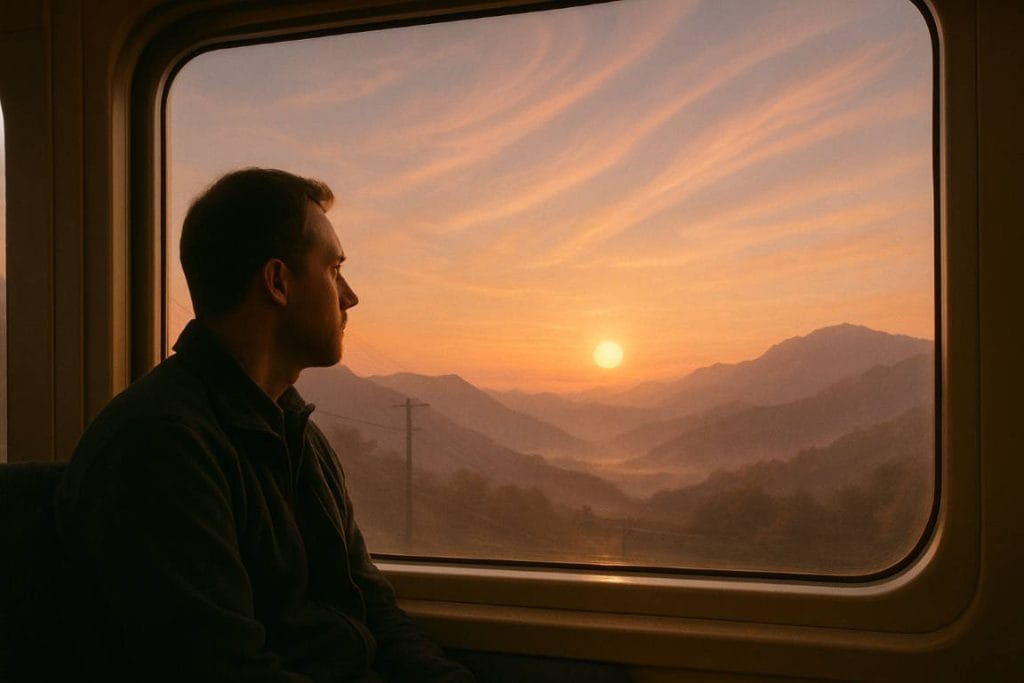
This reflection began one morning while I was traveling on the train in Melbourne, somewhere between two nameless stations. As the train hummed beneath me, the carriage was full and silent, as if everyone had agreed to disappear into their own thoughts. I sat there unnoticed, watching life play itself out in fragments. A train commute is another small ritual in the choreography of daily survival. It is a ritual that asks for nothing except presence, yet that presence is rare. Here, time folds in on itself: the same faces, the same seats, the same stops, the same announcements dissolving into background noise. It is in these moments of repetition that life’s quieter questions slip between the cracks, inviting themselves to sit beside us. The train is something like a horizontal monastery. Each carriage is a small world inhabited by the silent congregation of commuters, heads bowed, fingers flicking through digital rosaries, screens glowing with soft blue devotion. Some faces are drawn and weary, others unreadable behind the social masks. Most travelers are not really on the train but already at the office, or still tangled in last night’s quarrel, or adrift in anxious futures. The train, a narrow corridor of becoming, resists being. It offers no destination except another day like this one. If you allow yourself to truly see, the ordinary train commute is its own meditation and a mirror held up to the hidden patterns of mind and society. Look closely: there is hierarchy in the small social space, an unspoken pecking order in the struggle for seats and elbow room. There is the dance of accidental eye contact, the subtle tension between isolation and togetherness. Underneath this surface, deeper biological currents are at play. The nervous system, tuned by millions of years, scans for threat and comfort. The heart rate slows or quickens depending on the crowd and the person beside you. Cortisol trickles in response to a missed stop or a sudden jolt. Serotonin quietly measures our status. A seat by the window may bring a ray of joy, while standing, crowded near the doors, evokes a low hum of defeat. Small victories and losses accumulate here, shaping the narrative of a day. What is the true destination of the daily commute? Is it only the office, the school, the grindstone of productivity? Or is it an invitation to see oneself in the theatre of repetition? Zen speaks of chopping wood and carrying water which are mundane daily activities as the path itself. The train commute is our modern equivalent of chopping wood and carrying water. Can you be with the discomfort of boredom, the irritation of delay? Can you notice how your mind flees these sensations, inventing small distractions, fleeing toward the digital? What is it that you are truly trying to escape? And in these tiny actions like refreshing a screen, glancing at a stranger, what, exactly, is being sought? Is it relief from discomfort, or a deeper longing for meaning within the pattern? The urge to become, to get somewhere else, is the pulse of modern life; yet being is always, paradoxically, here, on this train, in this moment. The mind, when it finally lets go of its striving, can become attuned to the small world within. If you can pause, just for a breath, and let the repetition of the commute dissolve into presence, you may find that there is no “in the meantime”, no waiting between life and life. There is only “what is”, and in “what is”, the ordinary becomes the gateway to the ever present vastness.
The Advaita and Buddhist Traps of Binary Thinking
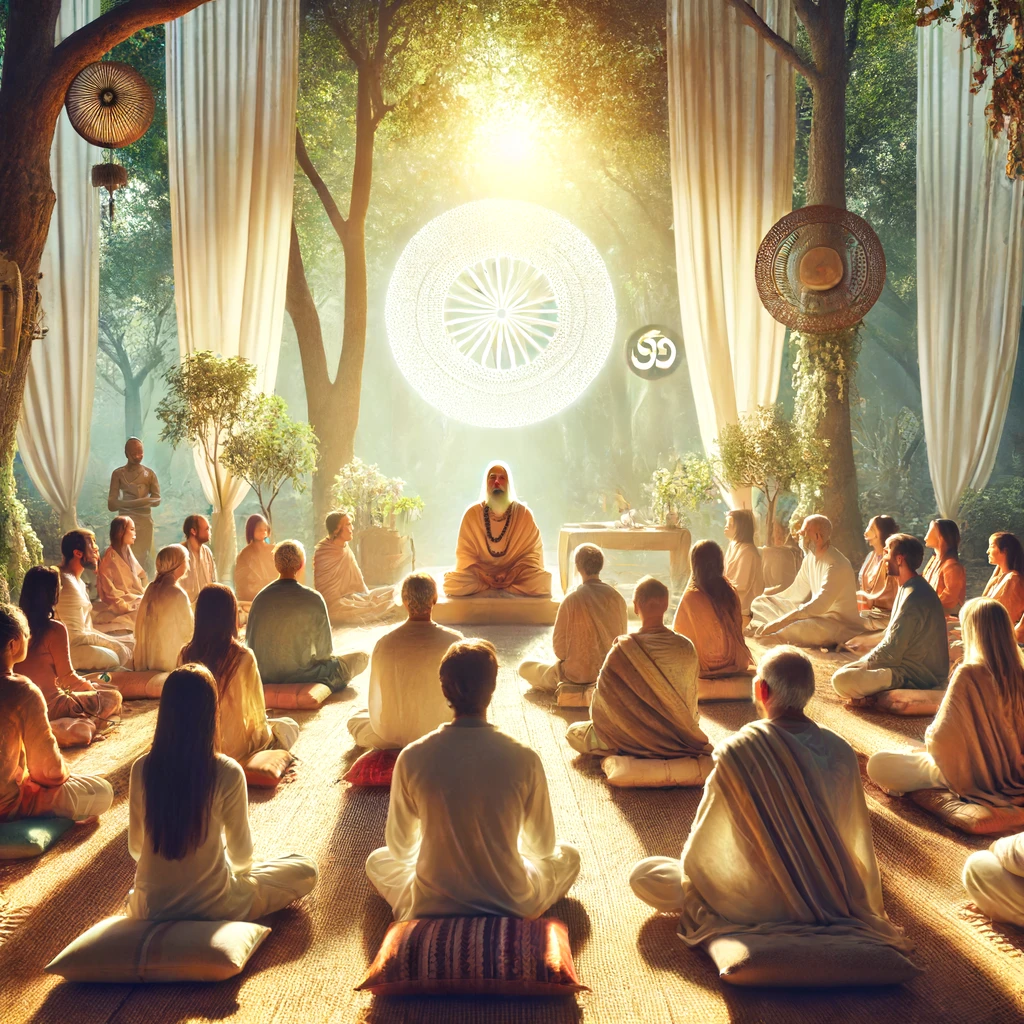
The Advaita and Buddhist Traps of Binary Thinking Binary thinking splits the world into opposites—true or false, real or unreal, self or no-self. We try to choose between them, but in doing so, we miss the truth: reality is beyond opposites. On the spiritual path, binary thinking tricks us, pretending to offer clarity while keeping us stuck. Before realisation, I was as trapped by it as any other spiritual seeker—though I didn’t realize it at the time. I thought I was being analytical. I’d weigh two options, two concepts and decide which one I believed. But belief itself was a trap, and the very act of choosing between binaries was keeping me bound to illusions. In my own journey, I often found myself oscillating between extremes. At times, I would cling to the world as real. At other times, I would reject the world as an illusion, retreating into detachment and disconnection. Neither approach brought peace, because both were rooted in binary thinking. But after realisation, from this space of clarity, I can see that reality doesn’t fit into these neat categories. It’s vast, fluid, and paradoxical. To see it clearly, you have to let go of the need to resolve opposites. You have to allow them to coexist. The Illusion of Opposites Opposites arise together; they define each other. You cannot have “light” without “dark,” “up” without “down,” or “real” without “unreal.” The opposites only exist in relation to each other, and their apparent separation is an illusion. One of the most common spiritual binaries is the idea of “real” versus “illusion.” Many teachings emphasize that the world is an illusion, a projection of the mind. I clung to this idea for a long time, using it as a way to detach from the pain and suffering of life. But even this detachment became a new form of attachment. I was attached to the idea of unreality, to the rejection of the world. But if the self is an illusion, what about the world? Is it also an illusion? And if the self and the world are both illusions, who or what is experiencing them? These questions felt urgent and existential. But they were all rooted in the same binary thinking. I was trying to separate self from not-self, real from unreal, subject from object. Another spiritual binary I struggled with was the idea of “self” versus “no-self.” Teachings like “I am not the body” and “I am pure awareness” pointed me in the right direction, but they also created a new kind of division. I became fixated on rejecting the body, rejecting the mind, rejecting anything that seemed “not me.” But this rejection only reinforced the illusion of separation. Now, I see that there is no separate self, but there is also no “not-self.” There is only awareness, expressing itself in infinite forms. The moment you stop trying to divide them, you see that they were never divided to begin with. From here, I can see that the body and mind are not obstacles—they are expressions of the same awareness that I am. The body is not “me,” but it’s not “not me” either. It’s a wave arising in the ocean of being, as temporary and as beautiful as the wind rippling across water. To reject it is to reject the ocean itself. Nagarjuna’s Negation I have to credit Nagarjuna for helping me see through the trap of binary thinking. Nagarjuna, a philosopher of unparalleled depth, dismantled the constructs of the mind through his profound method of negation. His teachings, rooted in the Madhyamaka school of Mahayana Buddhism, expose the limitations of binary thinking and lead us toward a direct experience of reality as it is—free from concepts. His philosophy of negation was like a lifeline when I was drowning in the mind’s dualities. By dismantling every fixed position—every “truth” the mind clings to—he pointed me toward the spacious awareness beyond opposites. The cornerstone of his approach is the tetralemma, which breaks down any binary concept into four possibilities: Something exists. Something does not exist. Something both exists and does not exist. Something neither exists nor does not exist. On the surface, these options seem contradictory or even nonsensical. How can something both exist and not exist? How can it neither exist nor not exist? These apparent contradictions are not meant to confuse us but to push us beyond the mind’s habitual need for certainty and resolution. Nagarjuna’s negation is not about providing answers but about dissolving the very questions that imprison us. The Tetralemma in Practice Let me give you an example from my own practice. I often struggled with the question, “Does the self exist?” Using Nagarjuna’s framework, we can analyze this question as follows: The self exists: This is the view most people start with—a belief in a stable, enduring self that is the doer of actions and the experiencer of life. From this perspective, the self is real, tangible, and central to existence. The self does not exist: Once the illusory nature of the self is seen, it is tempting to adopt the opposite view—that there is no self at all. The self both exists and does not exist: Here, we begin to glimpse the paradoxical nature of reality. The self exists as an appearance—dynamic, ever-changing, and dependent on conditions—but it lacks inherent existence. It is neither wholly real nor entirely unreal. The self neither exists nor does not exist: This final position transcends the binary altogether. It points to the nature of reality, which cannot be captured by any conceptual framework. To say the self “exists” or “does not exist” is to impose a limitation on something that is beyond both. By systematically negating each of these positions, Nagarjuna does not offer a new doctrine about the self. Instead, he liberates us from the need to hold any position at all. The inquiry dissolves, leaving behind only direct insight into reality. The question itself becomes irrelevant, and what remains is a spacious,
Stages of Spiritual Awakening

The journey of spiritual awakening is a winding road with many twists and turns along the way. While there are some common patterns and spiritual awakening stages that many people experience, everyone’s path is unique and unfolds differently. As someone who has walked this path for decades, I can say that the spiritual awakening stages are beautiful, messy, painful, blissful, incredible and at times dark. Everyone’s journey will be different. It’s important to recognize that these stages are not linear, nor is every seeker destined to experience each one. The spiritual awakening stages are more like a series of psychological and metaphysical openings that shed light on our human conditioning and spark an inward revolution. For some, the process is a soft unbinding, while for others, it may feel like a severe upheaval of reality. Feeling discontent with life as you know it For many, the first stage of spiritual awakening arises from a profound sense of discontent or emptiness with the day-to-day grind. Despite checking off society’s boxes of success, something fundamental is missing. An underlying feeling that there must be “more to life than this”. A vague yearning pervades, a homesickness for something they cannot quite name. There is an intuitive sense that merely making a living is not truly the essence of being fully alive. This feeling grows more pronounced over time. Nights are spent in existential questioning about purpose and the nature of reality itself. This profound feeling of separation from source becomes a catalyst for their spiritual awakening journey. The homesickness is finally recognized as a sacred calling to return to the depths of their true nature. Questioning your reality and belief systems As the thirst for truth grows, the next stage of spiritual awakening involves a deep and often unsettling questioning of personal reality and belief systems. This phase is characterized by turning fundamental assumptions about the universe, consciousness, and the narratives we’ve subscribed to inside out. This shaking up of mental and cultural constructs can be both liberating and deeply unsettling. You might start to question long-held beliefs about who you are, what the world is, and how it operates. This process can be difficult, as it challenges the very foundation upon which you’ve built your understanding of life. Spiritual curiosity and seeking knowledge This stage of spiritual awakening created voracious spiritual curiosity for me. I found myself drawn to various philosophies, faiths, and esoteric teachings – devouring books on Buddhism, Hinduism, metaphysics, and other non-dual traditions. I attended workshops, went on retreats, and sought out spiritual teachers and gurus. In the relentless pursuit of spiritual enlightenment, the seekers explore various paths, each one offering a unique perspective on reality. Their journey is fueled by a burning desire to unravel the mysteries of existence and to attain a deeper sense of meaning and purpose. This is typically the honeymoon period of seeking, where there is intense passion, energy and excitement of discovering new knowledge and experiences.. Finding Your Spiritual Guide or Guru For many seekers, there comes a point when the desire for a guru or spiritual mentor arises organically. Having a guide who has walked on the path can be invaluable. They can act as a mirror, insightful friend, and point the way when you feel lost. My experience has been that the guru appears when the student is truly ready. There were times of seeking outwardly for the right teacher, only to realize the ones I needed were presenting themselves all along – sometimes in human form, other times as life itself. Ultimately, the truest guru is the one who points you back to your own inner nature. They guide you to find the guru within. For me, another major insight came when I realized my path could not be dictated by any one teacher or tradition. I am immensely grateful for the many guides who have graced my life. As I learned to go directly to the source of my own being, all scriptures and masters revealed their greatest wisdom – that which I am seeking, I already am. Purging old habits and conditioning As my awareness expanded, there was an inherent purging process that took place on multiple levels. Old habits, relationships and possessions that no longer resonated with my inner truth started falling away – sometimes gracefully, other times with great resistance and turmoil. It was as if my being was shedding an old layer of skin. While painful at times to let go of attachments, this created space for me to align with the insights emerging from within. Looking back, I’m grateful for the people, situations, and comforts I’ve had to release to continue evolving. This stage of spiritual awakening is like casting away your anchor and setting sails on an infinite ocean. Non-attachment and surrender As the spiritual journey deepens, spiritual seekers begin to cultivate a deep sense of non-attachment and surrender. This shift in their consciousness arises from the realization that clinging to desires leads to suffering and dissatisfaction. Through their studies and meditation practices, they learn to let go of the need to control every aspect of their life and to embrace the present moment with acceptance. This newfound understanding of non-attachment does not come easily. But as you surrender to the present, you experience a profound sense of peace and contentment that had previously eluded you. Understanding you are not your ego – A pivotal realization A big stage in spiritual awakening was recognizing that the constant stream of thought, and emotions were not ultimately who I am. There was a witnessing awareness beneath the egoic mind. In the space between thoughts, I experienced glimpses of my true nature as consciousness itself. However, it was an ongoing process of catching myself getting re-absorbed in old mental patterns and stories – a continuous cycle of remembering my infinite essence. Experiencing periods of bliss and unity As conditioned beliefs dissolved, I had experiences of indescribable bliss, love, and a sense of unity with all
What Is Satsang?
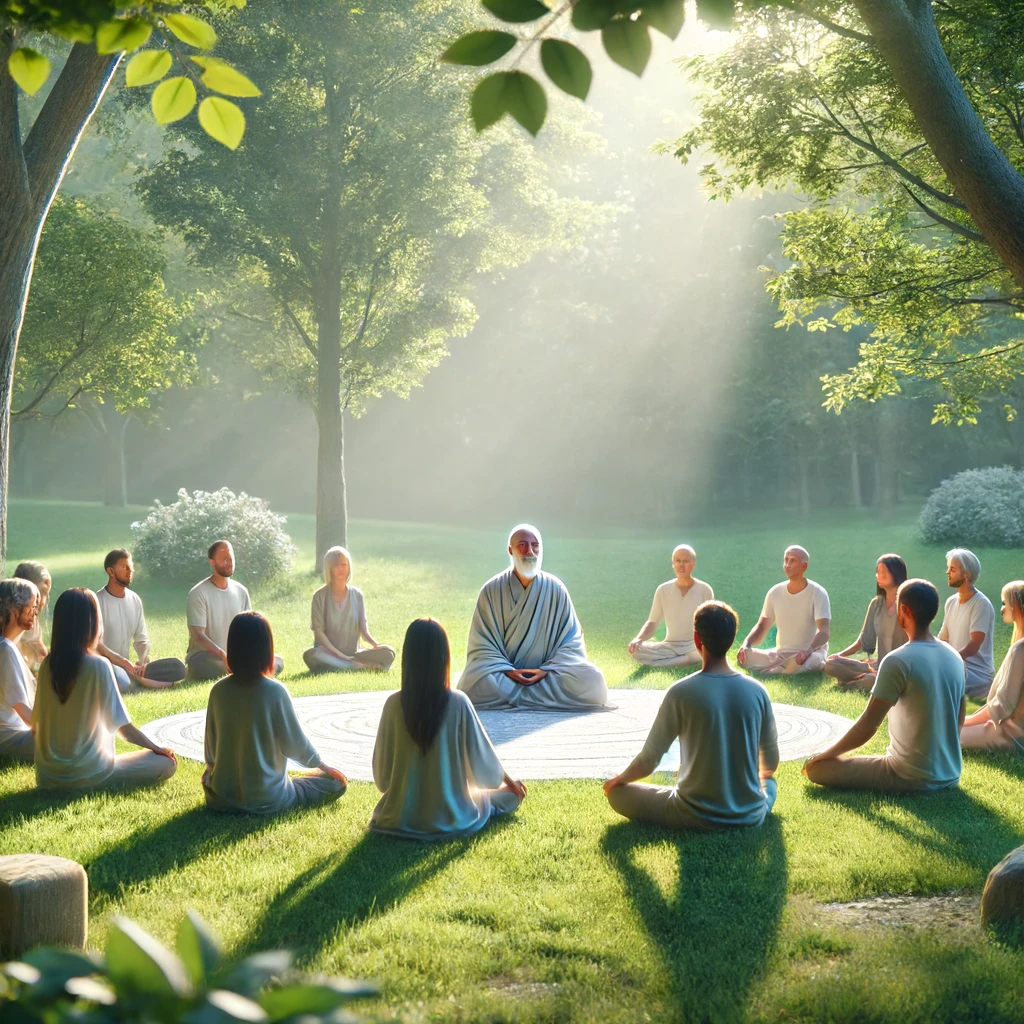
Satsang has been a profound part of my spiritual journey, and I can’t overstate the impact it has had on my personal spiritual growth and transformation. The word “satsang” itself has such a beautiful resonance – derived from the Sanskrit terms “sat” (truth) and “sang” (company or association), it means “being in the company of truth.” And that’s exactly what satsang provides – a sacred space to immerse oneself in the timeless wisdom and elevated consciousness that transcends the limitations of the mind. Satsang is defined as a gathering of spiritual seekers who come together to share in the teachings and presence of a realized master or guru. But it’s so much more than just a discourse. Satsang is a living, vibrant experience that allows one to directly imbibe the transformative energy that flows through an enlightened being. It’s a chance to let go of the constant mental chatter, and to connect with the stillness and truth that lies at the core of our being. Understanding Satsang The tradition of satsang has its roots in ancient spiritual practices, but it has been embraced and celebrated across various paths – from Hinduism and Buddhism to Sufism and mystical Christianity. While the specific practices may differ, the underlying essence remains the same: a gathering of sincere seekers in the presence of a realized spiritual guide, with the intention of understanding the limitations of the ego and experiencing a deeper connection with the divine. In many traditions, the role of the guru or spiritual teacher is pivotal in satsang. These are beings who have not only attained an understanding of the ultimate truth but have also embodied that realization in their very being. Their presence alone can serve as a potent catalyst for transformation, as they emanate a stillness and energy that can help dissolve the layers of conditioning and ignorance that veil our true nature. Yet, satsang is not about blind obedience or hero-worship; rather, it’s about cultivating an attitude of humble receptivity, an openness to allow the teachings and energy to penetrate and do their work. The guru is essentially a mirror, reflecting back our own innate divinity and reminding us of the limitless potential that lies dormant within each of us. At its heart, satsang is an invitation to step out of the confines of the limited, conditioned self and to taste the freedom and expansiveness of our unconditioned being. It’s a space where the mind can finally find rest, where the heart can open, and where the self can resonate with the universal love and truth. The Benefits of Satsang From my own experience, attending satsangs with realized masters has been instrumental in profound shifts in my consciousness. There’s something incredibly potent about being in the presence of one who has transcended the limitations of the ego and abides in the state of pure awareness. Their very existence serves as a living reminder of our own divine potential. One of the benefits I’ve experienced through satsang is a deepening sense of self-discovery and spiritual growth. The teachings and insights shared during these gatherings have a way of piercing through the veils of ignorance, shining a light on the blind spots and beliefs. With each satsang, I found myself peeling away yet another layer of the constructed self, unveiling the radiant truth. The collective energy that arises when a group of sincere seekers comes together is powerful. It’s as if we collectively tune into divinity, allowing us to access insight that might elude us in our individual pursuits. There’s a synergy that occurs that can shift our perception. Equally important is the sense of community and shared experience that satsang fosters. In a world that often feels fragmented and isolating, satsang provided me with a sanctuary – a space where I found kindred spirits walking a similar path, all united in the common pursuit of truth. There’s a deep sense of belonging and support that arises, a recognition that we are not alone in our spiritual struggles. This shared spiritual journey can be a source of immense strength and inspiration. Personal Transformation The path of self-realization is not an easy one, and it demands a level of commitment and courage that can be daunting. But the wisdom and inspiration from satsang was instrumental in fortifying my resolve, helping me to develop the tenacity required to face my fears. Through the teachings and the living example of the masters, it becomes easy to imbibe values such as compassion, patience, humility, and non-attachment as you can see the Guru embody and display these qualities in their everyday interactions. Satsang can be a constant reminder of the importance of living a conscious life. In the presence of those who have realized their true nature, it becomes impossible to continue clinging to the false masks that we so often hide behind. Satsang Meditation An integral part of the satsang experience is meditation. In many traditions, the gathering often begins with a guided meditation led by the guru or teacher. This practice serves multiple purposes – it helps to quiet the incessant chatter of the mind, creating a stillness and receptivity that allows us to more fully imbibe the spiritual wisdom and teachings. Whether it’s a simple breath awareness technique, a mantra repetition, or a more advanced form of witnessing meditation, these practices help train the mind to remain anchored in the present moment, rather than being swept away by the constant stream of thoughts. There’s a profound inner stillness and peace that arises when the mind is able to settle into its natural state of quietude. In those moments of deep silence, one can feel a connection to something vast and eternal – a sense of merging with the underlying ground of being. It’s a taste of our true nature, beyond the limitations of the individual self. Of course, like any spiritual discipline, effective satsang meditation requires patience and a willingness to work through the challenges that arise. But the guidance and support